Private 5G vs WiFi network: a complete guide with examples
Private 5G networks vs WiFi
When evaluating private 5G vs WiFi for modern operations, it ultimately comes down to matching the technology to the right application. While WiFi remains a familiar, low-cost solution, it can fall short where performance matters most, especially in complex environments. Private 5G networks can fill that gap by delivering more reliable coverage, better connectivity and inherent security of a dedicated network.
In this article, we compare both networks side by side, examine their pros and cons, and clarify where each technology works best using real-world examples from LMT Systems.
Private 5G vs WiFi: the key technical differences
At a technical level, the private 5G vs WiFi comparison isn't just about speed. Let’s break down how the two technologies differ across spectrum control, coverage range, handover behavior, and security.Spectrum and access management
WiFi operates primarily on unlicensed spectrum open to any nearby device. Because devices use a contention-based protocol, essentially listening to see if the airwaves are clear before transmitting, throughput and latency can fluctuate as connection density rises or neighboring networks interfere. A private 5G network, by contrast, operates on dedicated or locally licensed spectrum. Instead of devices competing for airtime, the 5G base station centrally orchestrates transmissions via deterministic scheduling. As a result, every connected asset receives guaranteed bandwidth and predictable, low-latency timing slot allocations even under heavy load.Coverage and site footprint
Thanks to higher transmit power and cellular signal design, a single private 5G node can cover up to four times the area of an enterprise WiFi access point indoors — and even more outdoors. For large-scale industrial facilities this coverage density advantage reduces physical infrastructure requirements:- Fewer access nodes: A facility requiring 6 to 8 WiFi access points might only need one or two private 5G radios for equivalent footprint coverage.
- Streamlined deployment: Fewer radio locations translate directly into reduced cabling, lower mounting and installation costs, fewer power drops, and simplified ongoing maintenance.
- Better signal penetration: 5G radio signals handle physical obstructions (such as high-density shelving, heavy machinery, and metal structures) better than high-frequency WiFi bands.
Mobility and handover
In a private 5G architecture, handovers between coverage cells are network-controlled. The core network coordinates the transition before the current link degrades, yielding sub-10 millisecond handovers with zero packet loss. In practice it means that private 5G can keep, for example, industrial equipment moving without connection blackouts or dropped data packets. In contrast, WiFi handovers are client-driven. The individual device determines when to drop its connection with one access point and associate with another. On mobile equipment, client-driven switching causes lag, dropped packets, and brief connection blackouts.Security and identity architecture
Private 5G uses SIM-based authentication. It means every device is hardware-authenticated against the private network core before any data is transmitted, making unauthorized access very unlikely. Traffic across the radio interface is encrypted by default using advanced cellular algorithms. While modern WiFi networks these days can achieve strong security, enforcement depends heavily on IT policy management, manual certificate provisioning, and credential handling. At the end of the day, WiFi remains inherently exposed to broad signal-scanning and rogue access point spoofing, whereas private 5G benefits from zero-trust hardware isolation straight out of the box. Next, let's put the main differences side by side.Private 5G vs WiFi at a glance
Here is a breakdown of how private 5G and WiFi stack up across key categories:| Category | WiFi | Private 5G |
| Spectrum | Unlicensed, shared with other users | Dedicated or locally licensed, depending on the country |
| Coverage per access point | Limited range, more access points needed | Wide area, fewer radios needed |
| Mobility | Device-driven roaming, possible dropouts | Network-managed handovers |
| Performance under load | Varies with user numbers and interference | Scheduled and more predictable |
| Security | Depends on configuration | SIM-based authentication built in |
| Upfront cost | Lower | Higher, partly offset by fewer access points |
| Device ecosystem | Virtually every device supports it | Growing, but still more limited |
| Skills required | Familiar to most IT teams | Specialist expertise |
WiFi vs private 5G: advantages and trade-offs
Neither network does it all, so knowing where each excels and falls short is key.Where WiFi comes out ahead
In general, WiFi wins on affordability, simplicity, and widespread device compatibility. Its main advantages include:- Low entry cost: Hardware is inexpensive, off-the-shelf, and requires no spectrum licensing fees.
- IT familiarity: Almost every internal IT team already knows how to plan, deploy, and troubleshoot WiFi networks.
- Broad device ecosystem: From enterprise laptops to handheld barcode scanners, virtually every connected device supports WiFi natively out of the box.
- Rapid deployment: Less complex environments like corporate offices and meeting rooms can be brought online quickly.
Where private 5G comes out ahead
Private 5G outperforms WiFi whenever coverage scale, high-speed mobility, and reliability take priority over initial setup costs. Its core strengths include:- Reach: A vastly larger coverage radius means far fewer radio nodes across extensive indoor and outdoor facilities.
- Mobility: Moving assets such as AGVs, automated cranes, and autonomous vehicles maintain uninterrupted data streams across cell boundaries.
- Performance: Dedicated spectrum allocations ensure predictable, ultra-low latency that remains unaffected by neighboring network traffic.
- Security: SIM-based identity verification enforces strict access control at the radio layer, ensuring only vetted equipment can connect.
- Future-proof scalability: Advanced capabilities like network slicing and multi-access edge computing allow teams to guarantee priority for critical processes as operational demands grow in the future.
Real-world examples of successful private 5G adoption
Private 5G vs WiFi differences are clearest in action. Here are two examples of how LMT Systems deployed private 5G to solve real operational challenges.Baltic Container Terminal
Container terminals are large, open and always in motion, with cranes and vehicles that cannot afford to lose connectivity. At the Baltic Container Terminal in the Port of Riga, LMT Systems deployed a private 5G network across more than 50 hectares, giving moving equipment uninterrupted data sessions. The setup also simplified the infrastructure, bringing the number of access points down to three. Why private 5G made sense: Covering an area of this size with WiFi would typically require many more access points and careful tuning to keep roaming smooth for machinery on the move. Private 5G delivered wider coverage with a far lighter footprint.Kurekss
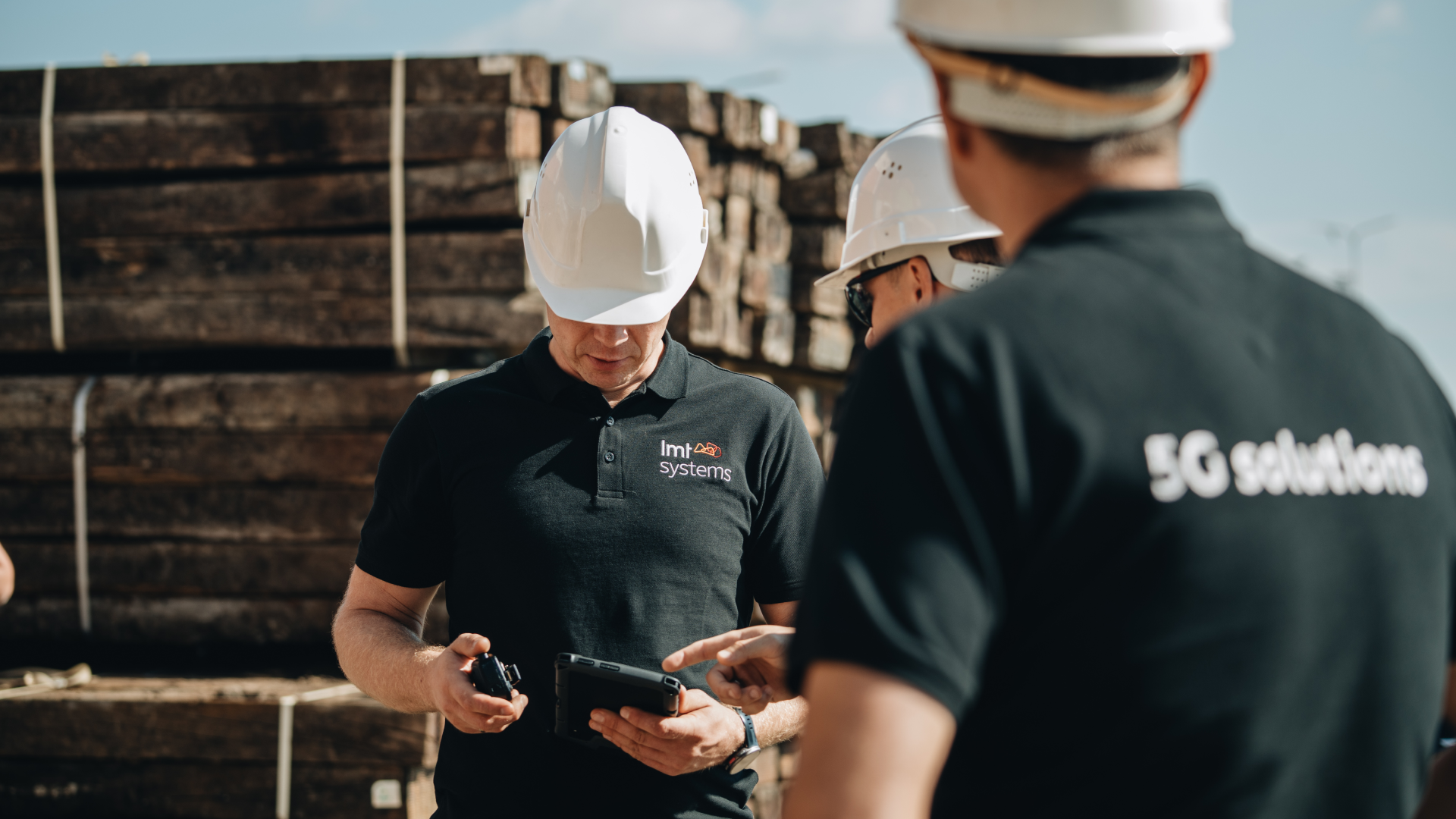
Kurekss runs timber manufacturing and logistics on a site that keeps growing. After a successful pilot, LMT Systems implemented a private 5G network that now covers the expanded site and supports mobile machinery and devices. SIM-based access control ensures that only authorized equipment can connect. Why private 5G made sense: The pilot let the company prove the technology before committing, and a single network could grow with the site instead of being patched with extra access points. SIM-based authentication also gives tighter control over connected devices than shared WiFi credentials typically allow.Private 5G proves its worth in complex environments
Real-world industrial deployments demonstrate that private 5G excels at delivering secure connectivity for difficult environments that demand wide reach and uninterrupted connectivity. Meanwhile, WiFi remains the cost-effective workhorse for everyday office tasks and localized indoor IT. At the end of the day, choosing a network solution isn’t always about picking a single winner, but rather deploying each technology where its strengths deliver the best results. For example, a hybrid approach can reserve private 5G for critical, high-bandwidth applications, while WiFi continues to serve offices, guest access, and legacy devices.Interested for more:
Private 5G network industrial applications: a guide
Industrial applications of private 5G networks Private 5G network industrial applications are transforming how manufacturing sites, warehouses and ports operate. Private 5G allows organizations to connect machines, sensors and mobile equipment reliably across large and complex sites. This supports real-time data collection, more precise coordination and automation of processes that depend on continuous connectivity. … Continued
November 10, 2026
Private 5G network security: architecture, risks, and best practices
Key aspects of private 5G network security Private 5G security refers to the technical and operational measures that protect a dedicated 5G network, including its devices, data and business processes, from unauthorized access, disruption, and misuse. As more organizations adopt private 5G infrastructure, the question is no longer just how fast the network runs, but … Continued
November 10, 2026
5G private network deployment: Models and examples
5G private network deployment: Models and implementation A 5G private network deployment gives an organization dedicated coverage and capacity, along with greater control over network security and performance. With all of its advantages, private 5G is an optimal choice for industrial environments and critical infrastructure. However, before a single antenna goes up, an organization must … Continued
November 10, 2026